LeaseTeq
Overview
Deliverables
Outcome
External link


The Problem
Traditional vehicle leasing processes relied on disconnected systems, manual document handling, complex approval workflows, and limited visibility between stakeholders. This created operational inefficiencies, communication gaps, and lengthy onboarding experiences for customers and dealers.
LeaseTeq's goal was to transform this process into a scalable digital ecosystem that could support multiple markets, stakeholders, and business models while maintaining a seamless user experience.
My Role
I was responsible for:
- Product discovery workshops
- User flow creation
- Information architecture
- Wireframing
- UI design
- Design system creation
- Interaction design
- Design QA
- Engineering collaboration
- Feature prioritization support
- UX reviews of implemented features
Business Impact
During my involvement, LeaseTeq evolved into a scalable leasing ecosystem supporting customers, dealers, operations teams, and financial partners across Europe.
The platform expanded into multiple markets, streamlined operational workflows, and established strategic partnerships with major organizations including Tesla, Hyundai, and BAWAG. The work created a strong foundation for future OEM and broker offerings while improving visibility and efficiency throughout the leasing lifecycle.
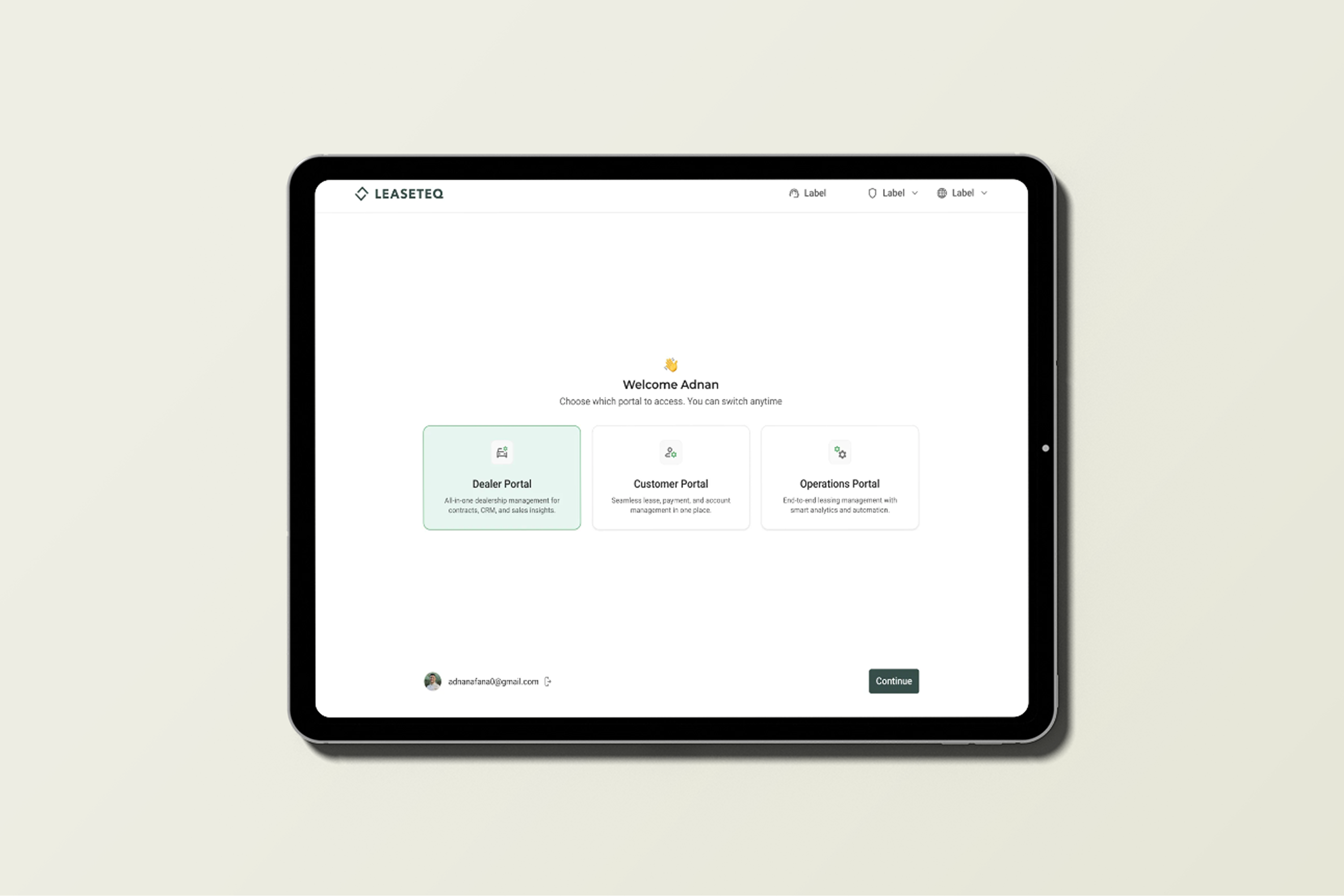
Primary User Groups
Customers
- Apply for vehicle leasing
- Upload required documentation
- Track application progress
Dealers
- Create and manage applications
- Monitor contract status
- Manage commissions and incentives
Operations Teams
- Review applications
- Manage risk and approvals
- Activate contracts
- Monitor lifecycle events
Challenge 1
Designing a Multi-Sided Platform
LeaseTeq required balancing the needs of multiple stakeholders operating within a single ecosystem.
Each group had different goals, workflows, permissions, and responsibilities, yet every interaction needed to remain connected throughout the leasing lifecycle.
What I Did
- Mapped stakeholder relationships
- Defined cross-portal workflows
- Standardized shared patterns
- Unified status communication across portals
- Created reusable interaction models
Result
Created a connected experience where customers, dealers, operations teams, and financial partners could collaborate efficiently while maintaining workflows tailored to their specific needs.
Challenge 2
Designing Complex Leasing Journeys Without Scroll
One of the most unique product constraints was designing most experiences to fit within a single viewport.
The business wanted users to understand information immediately, avoid lengthy forms, and complete applications with minimal friction.
What I Did
- Applied progressive disclosure principles
- Split large workflows into focused steps
- Prioritized essential information
- Added contextual guidance
- Optimized layouts for common laptop resolutions
Result
Users could complete complex leasing applications involving personal, company, ownership, employment, income, expense, and vehicle information through a structured and manageable experience.
Challenge 3
Simplifying Financial Complexity
Vehicle leasing introduces concepts that are unfamiliar to many users, including residual values, special payments, interest rates, rebates, subsidies, and commission structures.
The challenge was helping users understand financial decisions without requiring financial expertise.
What I Did
- Simplified terminology
- Introduced contextual explanations
- Designed real-time calculation feedback
- Displayed dynamic monthly payment updates
Result
Users could instantly understand how changes to duration, mileage, and special payments affected their monthly costs, improving confidence during the configuration process.
Challenge 4
Creating a Smarter Eligibility Experience
Qualification requirements introduced significant friction during onboarding.
Traditional approaches often ended with immediate rejection when applicants failed affordability assessments.
What I Did
I redesigned the experience around recovery paths instead of dead ends.
When eligibility requirements were not met, users could:
- Add partner income
- Include household income
- Increase special payment amounts
Result
The experience transformed rejection into guidance, helping users understand alternative paths toward eligibility rather than abandoning the process.
Challenge 5
Designing for Multiple Portals While Maintaining Consistency
Although each portal served different users, the experience needed to feel cohesive across the entire ecosystem.
My Approach
I created reusable patterns for:
- Status communication
- Form structures
- Tables
- Modals
- Notifications
- Document management
- Action hierarchies
Result
The platform scaled more efficiently while maintaining a consistent experience across Customer, Dealer, and Operations portals.
Challenge 6
Redesigning Contract Operations for Internal Teams
Operations users manage large volumes of contracts daily and require immediate access to the most relevant information.
Early workflows surfaced information based on process order rather than operational priorities.
What I Did
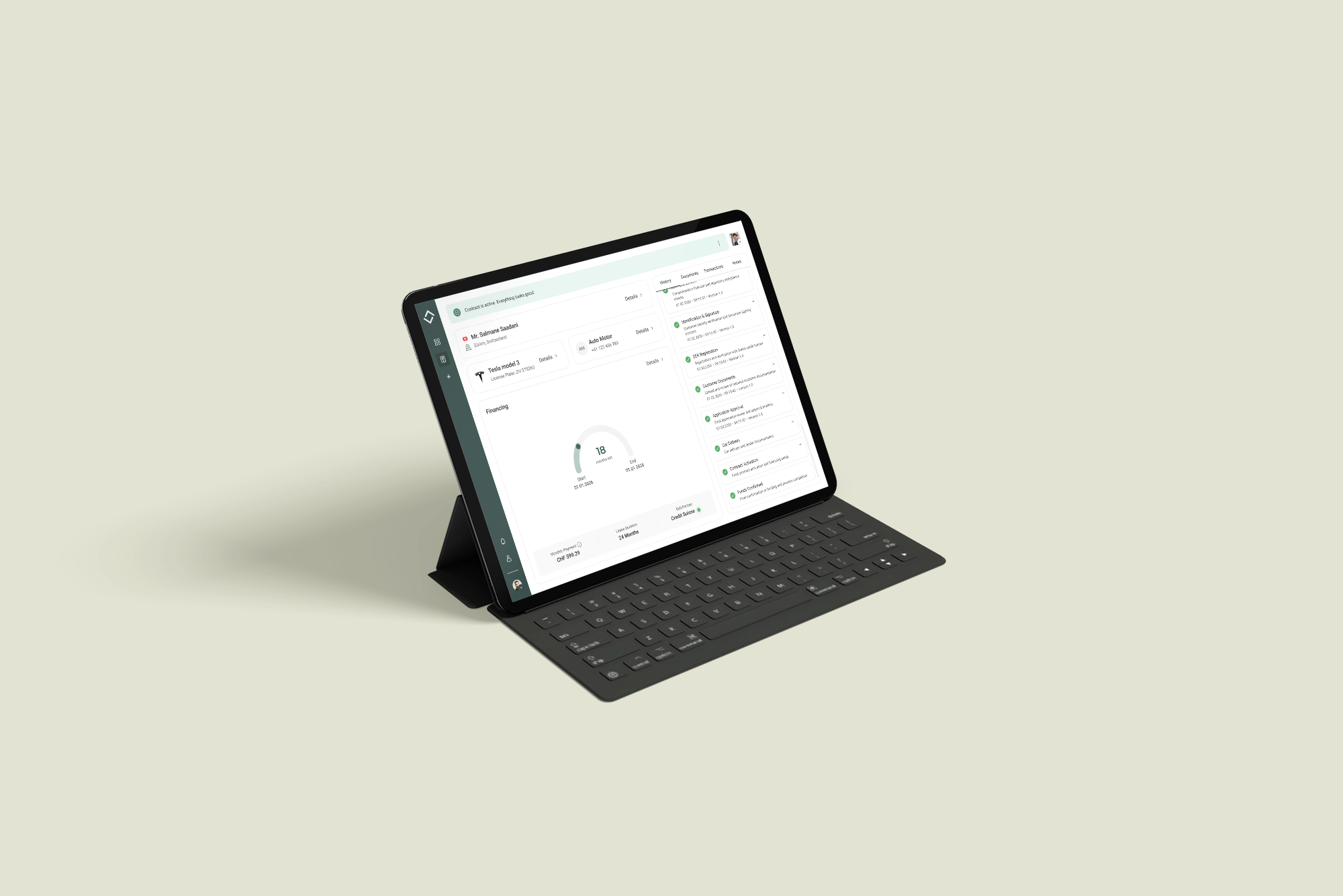
I reorganized contract management experiences around decision-making needs.
For example:
Before Activation
- Contract Status
- History
- Documents
- Finance
- Notes
After Activation
- Contract Status
- Transactions
- Finance
- Documents
Additional improvements included:
- Activity logs
- Smart assignment flows
- Reassignment workflows
- Approval visibility
- Status timelines
Result
Operations teams could access critical information faster, reducing navigation overhead and improving workflow efficiency.
Challenge 7
Managing Dynamic Contract Lifecycles
A single contract could move through numerous states including review, verification, approval, delivery, activation, ownership transfer, buyout, termination, and completion.
The challenge was helping users understand contract status without overwhelming them.
Solution
I designed:
- Status timelines
- Contextual banners
- Action-based notifications
- Lifecycle tracking components
Result
Stakeholders could immediately understand current contract status, required actions, and upcoming milestones.
Building a Scalable Design System
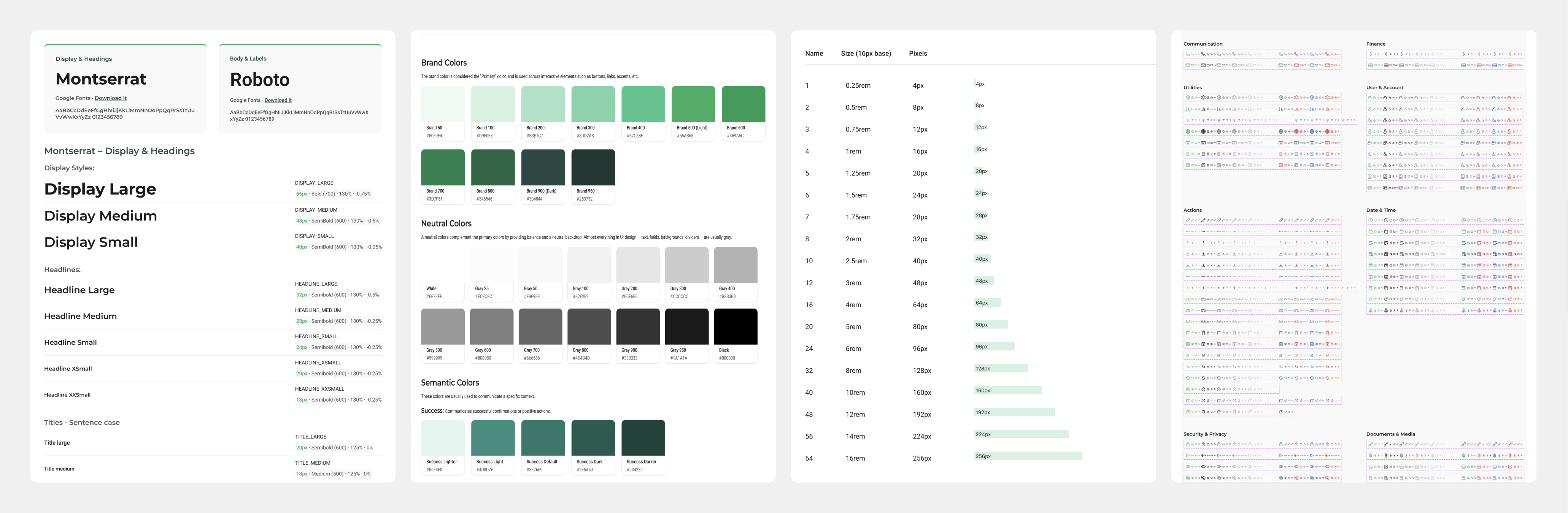
As the platform expanded across multiple countries and portals, consistency became increasingly important.
I helped establish reusable foundations including:
- Buttons
- Forms
- Tables
- Modals
- Status indicators
- Banners
- Navigation patterns
- Responsive layouts
- Typography scales
The design system accelerated feature delivery while maintaining a cohesive product experience.
Collaboration with Engineering
Beyond interface design, I worked closely with engineers throughout implementation.
My involvement included:
- Reviewing implemented features
- Identifying UX inconsistencies
- Clarifying edge cases
- Suggesting interaction improvements
- Supporting responsive behavior
- Ensuring design quality before release
This close collaboration helped reduce implementation gaps and maintain a high standard of product quality.
What I Learned
Designing LeaseTeq strengthened my ability to simplify complex systems involving multiple stakeholders, business requirements, operational processes, and financial workflows.
The project reinforced the importance of designing beyond individual screens and focusing instead on how people, systems, and processes connect across an entire product ecosystem.
Most importantly, it taught me how to create clarity within complexity while building scalable experiences capable of supporting long-term business growth.
Key Takeaways
LeaseTeq was one of the most complex products I have worked on, spanning three portals, multiple stakeholder groups, and five European markets.
The project strengthened my ability to simplify complex workflows, balance business and operational requirements, and design experiences that scale across different user types and markets.
Most importantly, it reinforced that great product design is not just about creating screens—it is about understanding how people, systems, and processes connect across an entire ecosystem. This mindset helped me design experiences that support both business goals and user needs at scale.
Due to the size and complexity of the project, this case study highlights only a portion of the work. I'm happy to share additional workflows, design decisions, and product challenges if you'd like to learn more.
Schedule a conversation →

